 My Real Test
Schulte Grid Attention Test
Schulte Grid is a classic visual attention training tool. Find and click numbers in order within a grid to train your visual search speed and focus.
Play: Schulte Grid Attention Test
Your 5×5 time counts toward the leaderboard; other sizes are free practice
Click from 1 to 25 in order — the faster you finish, the stronger your focus · Your 5×5 time counts toward the leaderboard; other sizes are free practice. Results are for self-improvement only.
About This Test
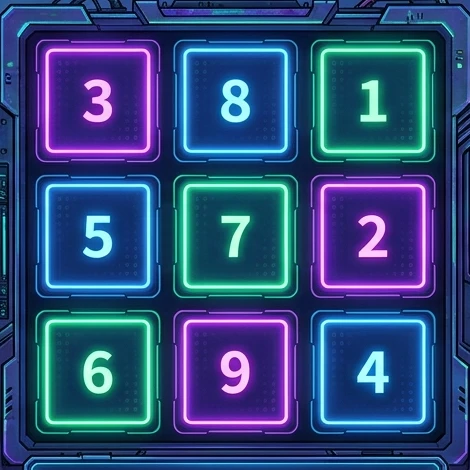
The Schulte Grid (Schulte-Tafel) is an attention training tool invented in the 1960s by German psychiatrist Walter Schulte. It is a square grid with numbers from 1 to N randomly distributed (typically 16, 25, 36, etc.), and the trainee must find and click them in order as quickly as possible.
The training is based on visual search theory: by forcing the eyes to move rapidly within a limited area, it trains both the concentration and the allocation of visual attention. It effectively improves distractibility and speeds up visual information processing.
Extensive research shows that regular Schulte Grid training significantly improves attention span, visual search efficiency, and cognitive flexibility. It is widely used in children's attention training, pilot visual training, and cognitive rehabilitation for older adults.
How It Works
- 1Choose a grid size (default 5×5; your 5×5 time counts toward the leaderboard, other sizes are free practice).
- 2Press "Start Training"; the timer begins and the grid shows randomly placed numbers.
- 3Starting from 1, click the cells in order — 1, 2, 3… — staying focused and fast.
- 4A wrong click flashes red but doesn't reset progress. Finish all numbers and your time is your score; the faster, the stronger your focus.
Why Take It
Improve your focus
Shorten your completion time through practice to reduce distraction when studying or working.
Train visual search speed
Force your eyes to move quickly across a limited area to boost information retrieval and visual processing.
Challenge yourself at any age
Suitable from children to seniors, with measurable results to watch your focus steadily improve.
Results Preview
Score leaderboard · Top 100
No scores yet — claim the top spot!
FAQ
What's the scientific basis for Schulte Grid training?
Schulte Grid training is based on visual cognitive science and attention theory. Research shows that regular training significantly improves attention span, visual search efficiency, and cognitive flexibility. It is widely applied in children's attention training, pilot visual training, and cognitive rehabilitation.
How long should I train each day?
Beginners are advised to train 2–3 times daily for 5–10 minutes; advanced users 3–5 times for 10–15 minutes. Consistency matters more than a single long session. Aim for at least 5 days a week for the best results.
What age groups is it suitable for?
Schulte Grid training suits everyone aged 3 and up. Children can improve attention and learning; teens and adults can boost work and study efficiency; seniors can help prevent cognitive decline. Choose a difficulty level that matches your age and abilities.
How soon will I see results?
Most users feel improved attention within 1–2 weeks of consistent practice, such as focusing longer on study or work. Clear gains — faster visual search, fewer distractions — usually appear in 4–6 weeks. Significant improvement comes after 3+ months of continued training.
Are there any side effects?
Schulte Grid training is a safe attention method with no known side effects. Avoid overtraining — keep single sessions under 30 minutes. Rest if you experience headaches or eye strain. Children should be supervised by an adult to ensure good posture.
How do I evaluate my progress?
Track your completion time each session — a downward trend means improvement. Also observe longer sustained focus in daily life and test visual search performance. Keep a training log and review it regularly to adjust your plan.
Related Tests

Reaction Time Test
Free online reaction time test: click the moment the red square turns green, 5 rounds averaged. Human average is about 250 ms — how fast are you?
Number Memory Test
Free number memory test: digits flash and hide — click them in ascending order. Starts at 3 digits and climbs to your limit; best span hits the leaderboard.

FPS Aim Trainer Test: Track Your Accuracy
A browser FPS aim trainer that scores your accuracy and best combo, then ranks you on a Top 100 leaderboard. Free, no sign-up.