 MyRealTest
Rice Purity Test
The legendary 100-question Rice Purity Test — answer honestly, see your 0–100 purity score, and check where you land among 7 purity tiers.
The classic Rice Purity Test from Rice University. Answer Yes or No to 100 life experiences, get your 0-100 purity score with 7 tiers, and compare with friends.

About This Test
The Rice Purity Test is a 100-question checklist of life experiences, from a first gentle date to far more adventurous territory. For each item, answer Yes if you've done it, No if you haven't.
Your score equals the number of items you've never done. The more No's, the higher your purity. There's no right or wrong — it's simply an honest map of your own timeline.
How It Works
Why Take It
An honest mirror
Compare with friends
Results Preview
Sample Question
“Held hands, romantically?”
FAQ
The Rice Purity Test is a viral entertainment checklist that began on US college campuses. It's not a diagnostic tool and it does not measure personality or morals — treat it as playful self-reflection.
Related Tests
 Know Yourself
Dark Triad Test
Classic SD3 scale: 27 questions measuring Machiavellianism, Narcissism and Psychopathy, with your dark spectrum and type reading. Free, no sign-up.
 Know Yourself
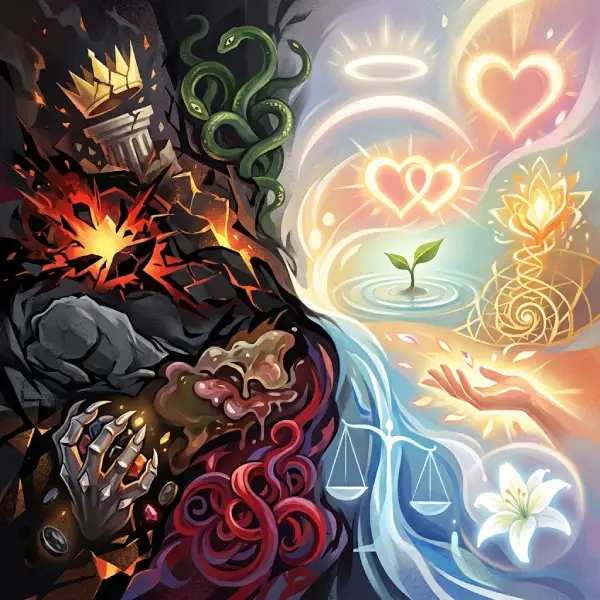
Seven Deadly Sins vs. Seven Virtues Test
Free online personality test measuring the seven deadly sins and seven virtues across 14 dimensions. 35 questions, instant spectrum result, no sign-up required.
 Know Yourself
Dream Personality Test: Fantasy or Inner Calm
A 16-question dream quiz revealing your dominant style—Fantastical Dreamer or Still Reflection—and what your dreams reveal about your creativity and calm.
 Know Yourself
Global City Personality Match Test
10 scenario questions map your lifestyle preferences, and a Euclidean-distance algorithm finds your 3 best-fit cities from 30 worldwide. Free, no sign-up.